The Craft
Five stages. No shortcuts.
Miao silverwork is not a style applied at the end of production. It is the production itself: a slow sequence of fire, wire, pressure, patience, and touch.
Every piece at Atelier Azurée begins in Guizhou, where silver has been shaped by hand for generations. The tools are simple. The work is not. A single pair of filigree earrings can take a full day to complete; more intricate pieces may take several days. There are no molds, no plated surfaces, no machine-made shortcuts. Only silver, hand, and time.
01
Smelting & Wire Drawing
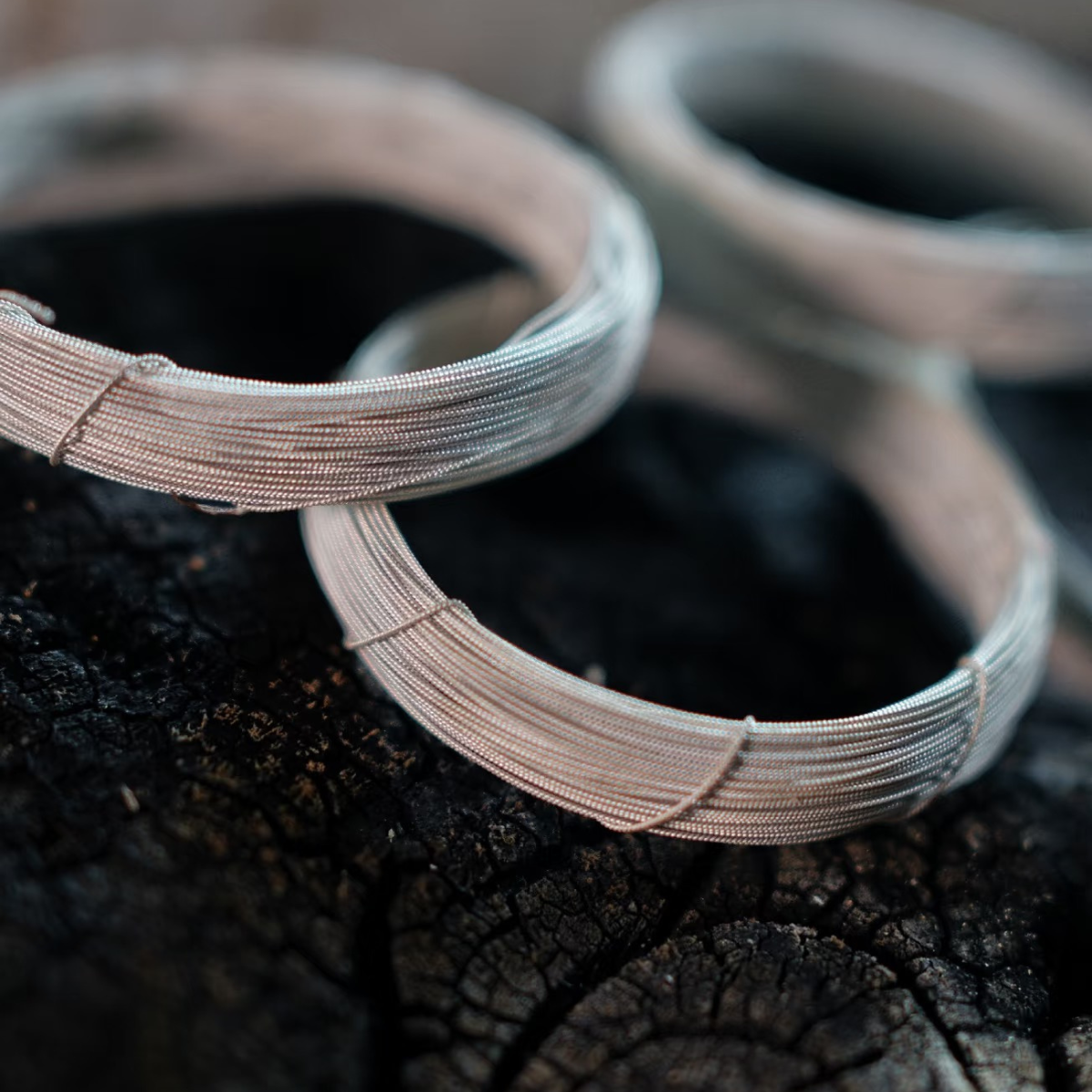
The process begins with silver ingots, heated until they soften and become workable. Once cooled, the silver is hammered, stretched, and drawn through progressively smaller openings until it becomes fine wire.
This wire is the foundation of Miao filigree. In the hands of a master silversmith, it can become thinner than a strand of hair, yet strong enough to hold a pattern when twisted and soldered into place.
What looks delicate is the result of force repeated with extraordinary control.
02
Filigree Weaving
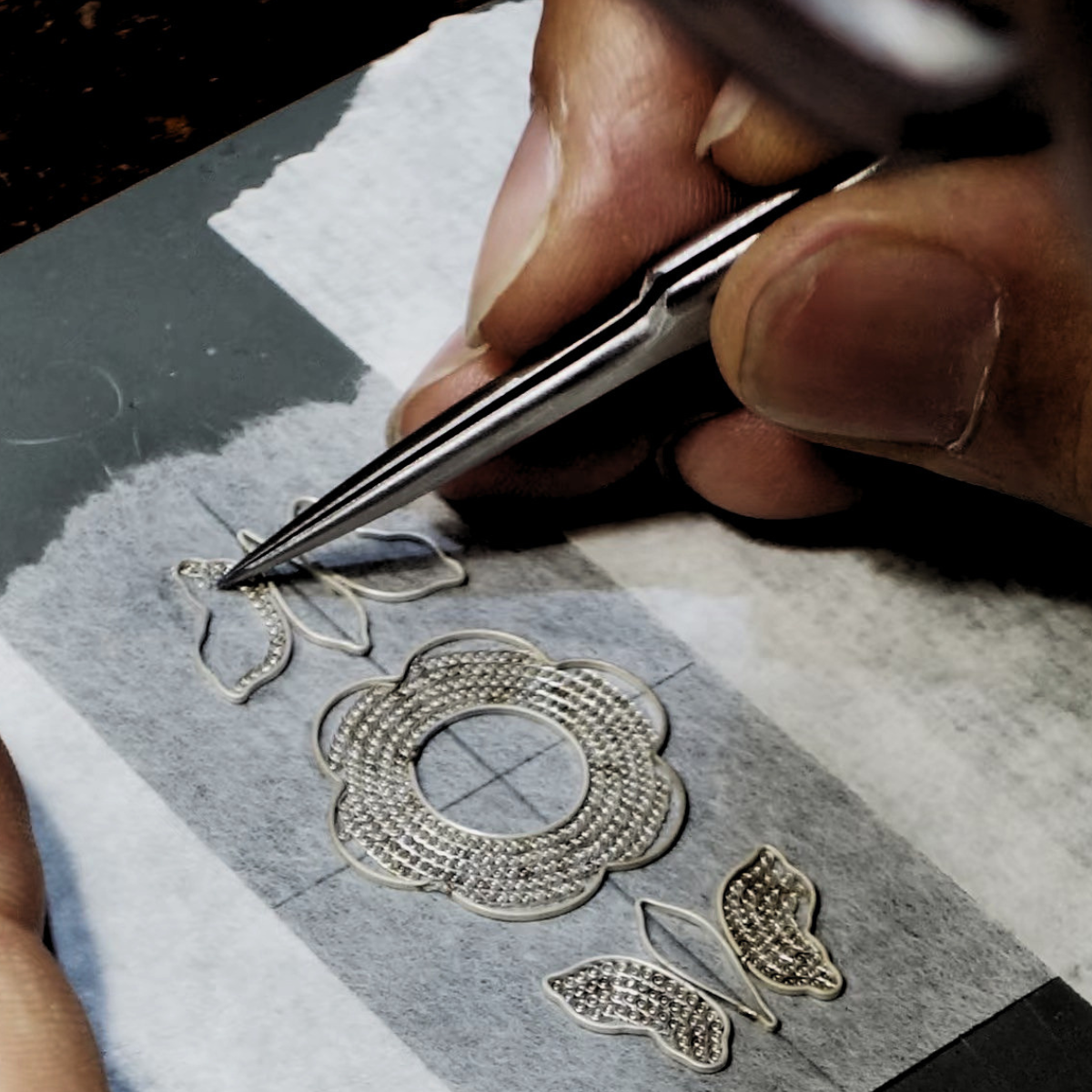
The drawn silver wire is twisted, braided, coiled, and shaped by hand. This is where the surface of a piece begins to take on movement.
Many Miao motifs are not sketched from paper. They are remembered through the hand: spirals, flowers, birds, waves, and butterfly forms passed down through families and workshops. The artisan works from knowledge stored in the body, adjusting each curve by eye.
No two filigree pieces are exactly identical. The small differences are not flaws. They are proof of human work.
03
Chasing & Repoussé

For pieces with raised relief, thin sheets of silver are worked from both sides using small hammers and chisels. The metal is pushed, lifted, softened, and sharpened until a pattern emerges from the surface.
This stage gives silver its sculptural quality. A flower petal gains depth. A bird wing catches light. A wave pattern begins to feel alive rather than printed.
The work is quiet, repetitive, and exacting. Too much pressure can split the silver. Too little leaves the form flat.
04
Soldering & Assembly
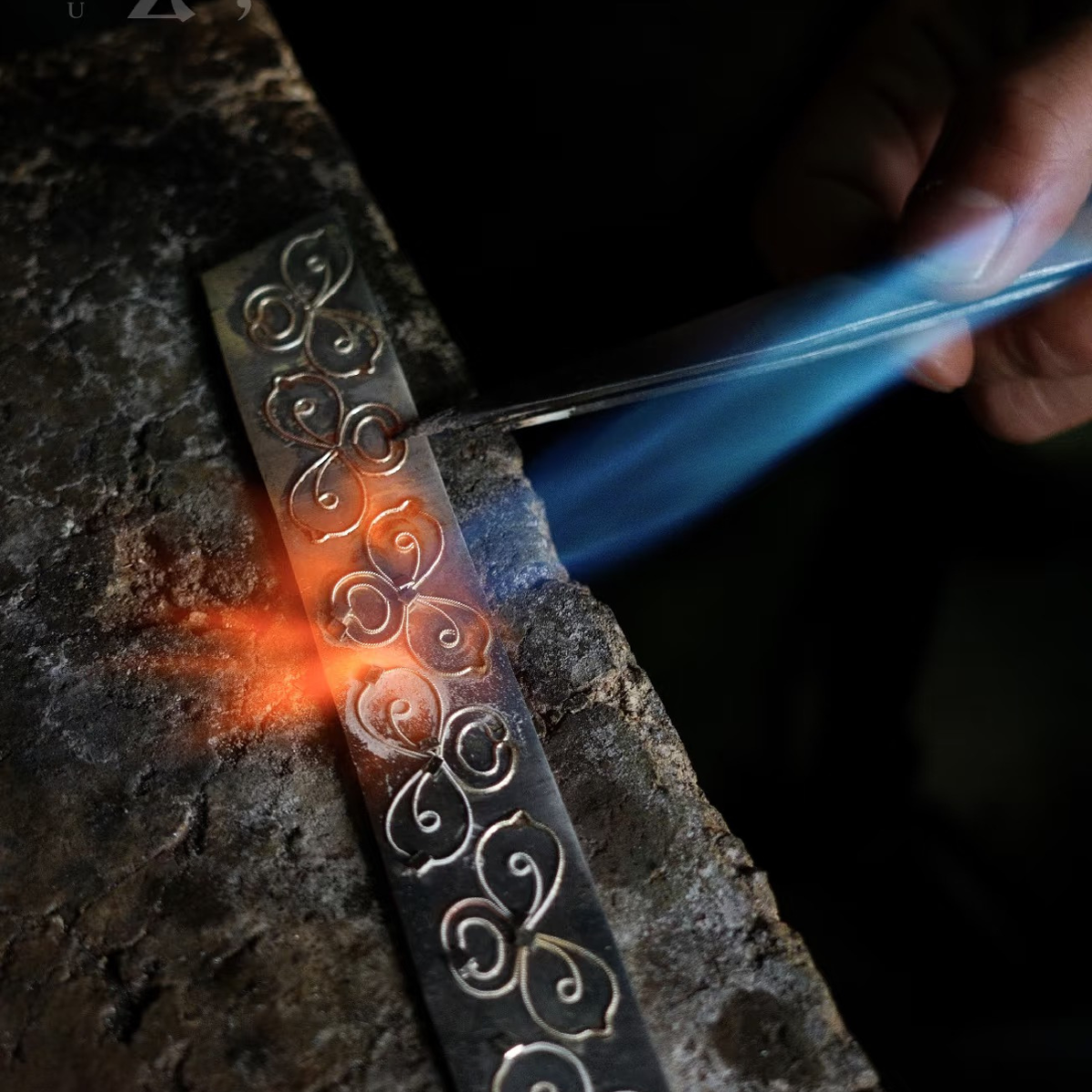
Each filigree element is then joined by hand using silver solder and controlled heat. This is one of the most demanding stages of the process.
The artisan must bring separate pieces together without flooding the fine details, softening the pattern, or leaving visible joins. A flame held too long can undo hours of work. A solder point placed correctly disappears into the design.
This is why handmade silver cannot be rushed. The beauty of the finished piece depends on what you do not see.
05
Finishing & Natural Patina

The final piece is cleaned, burnished, and polished by hand. We do not plate our silver. We do not lacquer it. We do not cover the surface with a finish that prevents it from aging.
Silver is a living material. With wear, it softens, brightens in some places, and darkens gently in others. This natural patina is part of the object's life.
A piece of Atelier Azurée jewelry is not meant to remain untouched. It is made to be worn, handled, remembered, and carried forward.
Why It Matters
In a world where jewelry is often cast, plated, photographed, and forgotten, Miao silverwork asks for a different rhythm.
It asks us to notice the hand behind the object.
It asks us to respect the time inside the material.
It asks us to understand ornament not as decoration alone, but as memory, identity, and care.
Atelier Azurée exists to keep this work present: not frozen as heritage, and not diluted into trend, but worn in real life.
Every curve, solder point, and silver thread carries the same promise:
made slowly,
made by hand,
made to mean something.